D&S IFCA challenges flawed evidence base and recommendations set out in sweeping Fingleton Review of Nuclear Regulation
Devon and Severn Inshore Fisheries and Conservation Authority (D&S IFCA) has taken the opportunity to review and challenge the Fingleton ‘Nuclear Regulatory Review 2025’. The Fingleton Review was commissioned by the UK Government to inform a radical reform of nuclear regulation “to achieve faster delivery and value for money in nuclear infrastructure”.
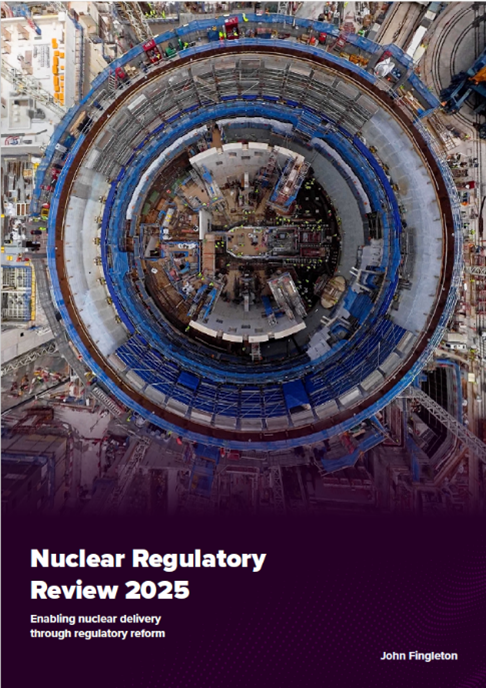
The Fingleton Review proposes sweeping reforms to nuclear and environmental regulation, citing alleged systemic failures and disproportionate environmental protections. However, the conclusions of the Fingleton Review rely heavily on flawed evidence of Hinkley Point C nuclear power station in Somerset (HPC). This failure to use best available evidence risks undermining environmental safeguards and public trust.
Most critically, the Fingleton Review overlooks the marine impact of HPC: over 4.6 million adult fish killed annually, including a yearly total of 450 tonnes of cod, whiting, and herring. These figures are not hypothetical; they are based on evidence already accepted by regulators and the Secretary of State.
The Fingleton Review states that it has drawn upon The Corry Review of Defra’s regulatory landscape, which assessed whether regulators and regulation were fit for purpose in driving economic growth and nature recovery. The Corry Review urges greater transparency in use of data for better decision-making and public trust.
Therefore, it is deeply concerning that the best available data have not been used transparently in the Fingleton Review’s use of the Hinkley Point C case study. However, the Corry Review also makes use of an incomplete case study of HPC which fails to accurately represent the ecological impacts of HPC’s fish kill.
This situation suggests there is much still to be done to ensure that evidence is used appropriately to inform balanced reviews of the UK’s regulatory landscape.
Key Areas of Concern
• Flawed Evidence: The Review ignores previously agreed calculations of fish mortality, and uses unrealistic estimates of fish protection benefits. This undermines the Review’s recommendations on proportionality and compliance.
• Environmental Risk: HPC’s cooling system will entrap vast numbers of fish larvae and juveniles, which are equivalent to millions of adult fish. Once HPC is operational, these losses cannot be mitigated adaptively.
• Developer Delays: EDF’s own decisions caused a seven-year delay in developing the Acoustic Fish Deterrent (AFD), the keystone fish protection measure that has been required under the Development Consent Order since 2013 but has yet to be installed. The Review misattributes delays and extra process to regulators, rather than to EDF.
Implications for Review Recommendations
Recommendations 11–13 advocate major changes to Habitats Regulations and Environmental Impact Assessment regimes, including alternative compliance pathways and reduced scrutiny. These proposals, if based on flawed evidence, risk weakening important environmental protections and enabling future harm.
For example, allowing developers to bypass site-specific assessments through payments to nature funds ignores legal precedents and ecological realities. Marine impacts like those of HPC cannot be offset by generic measures.
Conclusions
Failing to engage with best-available evidence is not acceptable, particularly when the stakes are so high. The ecological integrity of the marine protected area network, national fisheries, and public confidence in environmental governance and government decision-making depend on appropriate use of evidence. Before implementing reforms, the UK Government should urgently revisit the evidence underpinning the Review’s recommendations, and question the processes that lead to inappropriate use of evidence in the Fingleton and Corry Reviews. Future decisions must be grounded in accurate, unbiased evidence, not what is most convenient to developers.
More Information
If you would like further information, please contact the Chief Officer, Mat Mander, at 01803 854648 or m.mander@devonandsevernifca.gov.uk.
To find out more about the responsibilities of D&S IFCA and the work it undertakes, please visit the About Us page on our website.