Marine Spatial Prioritisation
Page review/updated 08/10/2026
Page Updated: 8th October 2026
Marine Spatial Prioritisation is the process of understanding and optimising the use and environmental protection of our seas. This is becoming more important in the face of increasing competition for space from diverse sectors such as energy generation, ports, aggregate dredging, recreation and fisheries.
D&S IFCA regularly responds to consultations on a range of marine developments in its District, in order to ensure that fisheries, fish and habitats (including in protected areas) are appropriately considered throughout the process, and that decisions are informed by the best available evidence.
Since 2022, D&S IFCA’s work in this area has been supported by additional funding from Defra, recognising the national importance of the Marine Spatial Prioritisation programme. The additional funding has enabled D&S IFCA to continue contributing specialist expertise to this process, including supporting the work undertaken by the Authority’s Marine Development Officer.
Examples of recent work
2022/23
- Reviewed 28 marine licence applications for their impacts on fisheries and the marine environment.
- Twelve consultation responses were submitted, including:
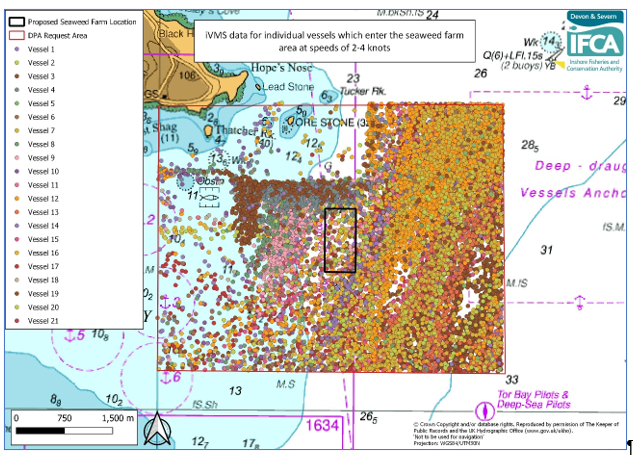
- a proposed mariculture development, in which Officers highlighted the use of the area proposed by existing commercial fishing operations and make suggestions for more appropriate areas for the development to support the mariculture sector. Two additional responses – in January 2023 and April 2023 were submitted.
- Defra’s Nature Recovery Green Paper – Protected Sites and Species. D&S IFCA supported the AIFCA response but added a few further comments and supporting responses to the submission.
- Defra’s Environmental Targets – D&S IFCA’s response relates specifically to the question “Do you agree or disagree with the level of ambition proposed for the Marine Protected Area target?”. Detail was given on the targets and benefits proposed for MPAs but raised a few concerns on the lack of full condition assessments for many sites and highlighted the need for effective monitoring of compliance within MPAs.
- Response to Defra’s Remote Electronic Monitoring (REM) Consultation
- Continued engagement with the Hinkley Point C project, including issues relating to fish protection measures, dredging and disposal activities.
2023/24
- Reviewed 26 marine licence applications for their impacts on fisheries and the marine environment.
- Responded to EDF consultation on Hinkley Point C to outline concerns about impacts on fish populations and the evidence base for plans to create ‘compensatory habitats’ to compensate for fish kill.
- Responded to South and South West Marine Plan Monitoring surveys
- Responded to NNB pre-application Consultation on a Development Consent Order material change to the requirement to have Acoustic Fish Deterrents at Hinkley Point c water intakes.
- Responded to Natural Resource Wales Consultation on a Marine Licence for aggregate dredging, at Bedwyn sands, of the designated feature of the Severn Estuary SAC.
- Submitted a response to a consultation on the seasonal closure for the Southwest Crawfish Fishery
2024/25
- Reviewed 29 marine licence applications for their impacts on fisheries and the marine environment.
- Raised concerns regarding potential impacts on habitats, fish assemblages and commercial fisheries for a range of projects, including aggregate dredging and a wind farm. The aggregate dredging from Bedwyn Sands in the Severn Estuary SAC required three follow up responses by D&S IFCA – 23rd July 2024 follow up to Applicant comments, 23rd July Response 2 and December 2024 follow up to applicants comments.
- Submitted a response to a consultation on the seasonal closure for the Southwest Crawfish Fishery
- Substantial early pre-application engagement on aquaculture, tidal power and port works to minimise impacts on fisheries, fish and habitats.
2025/26
- Reviewed 27 marine licence applications for their impacts on fisheries and the marine environment. Responses included further work to promote co-existence and reduce conflict between mariculture and wild-capture fishing methods. Two responses were made in April 2025 and May 2025.
- Officers used local expertise to encourage transparent use of best available evidence through its response to the national Fingleton Nuclear Regulatory Review. The News Item relating to D&S IFCA’s response to this review ca be viewed here.
- Through consultation responses, sought to shape national discussions on offshore wind compensatory habitats, HRA guidance review, national scallop fishery measures, and MMO Stage 3 MPA management measures.
- Contributed to discussions on planned and prospective developments in the Severn Estuary and Bristol Channel, including port development, nuclear and tidal energy that may affect protected sites and wider fish populations.
Why this work matters
By engaging early and consistently in marine licensing, planning and environmental permitting processes, D&S IFCA helps ensure that the potential impacts of development on fisheries, fish stocks, marine habitats and coastal communities are understood before decisions are made. This supports sustainable development, helps protect the marine environment and ensures that the interests of both commercial and recreational fishers are represented.