
D&S IFCA publishes its report on berried lobster seasonality surveys, detailing the findings of the surveys carried out between May 2023 and May 2025.
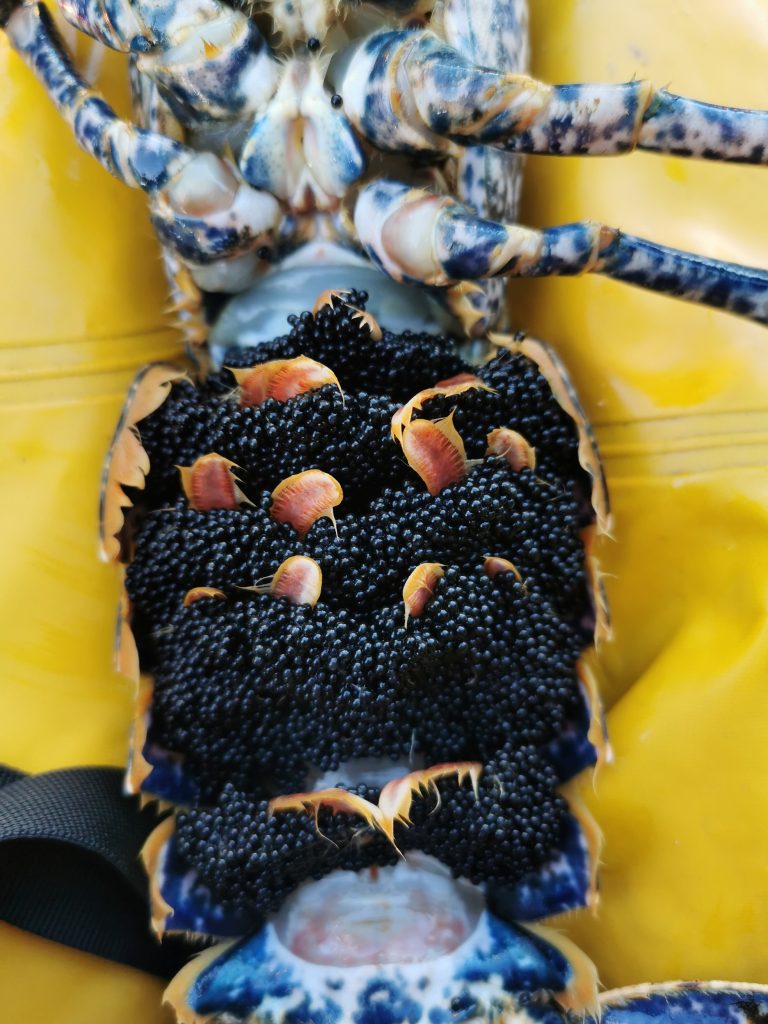
Egg-bearing (berried) lobsters cannot be landed under current National Legislation. However, some fishers have been known to illegally remove eggs from lobsters before landing, which breaches fisheries legislation and affects stock sustainability. To improve understanding of the lobster lifecycle and provide information for enforcement options, Officers set out to establish when egg-bearing and natural shedding of eggs occurs, and what factors might affect this.
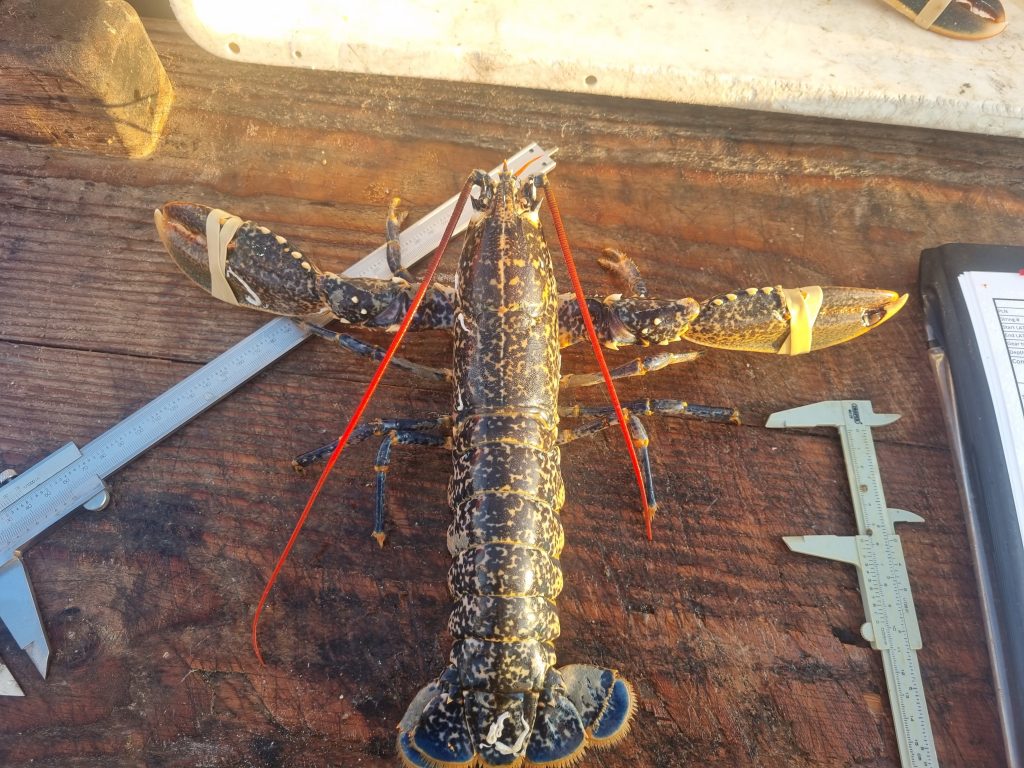
From 2023 to 2025, D&S IFCA Officers undertook surveys on board commercial fishing vessels, with the aim to confirm the months of the year in which lobsters carry eggs, the stages of development of these eggs, the egg shedding period, and the months where there is no egg bearing by lobsters. All surveys took place between the months of February and October each year.
What are the results from these surveys?
The full report on these surveys can be found here.
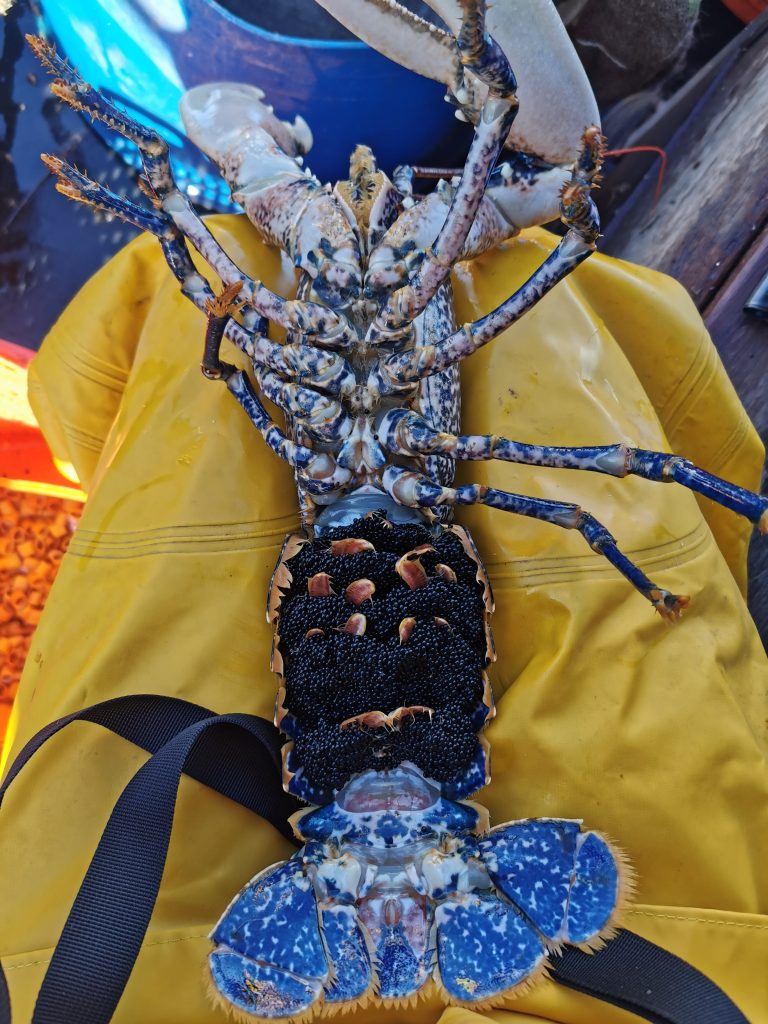
In total across 35 surveys, 3,918 lobsters were caught, sexed, and measured, of which 17.1% of all female lobsters caught were berried. The months in which the highest proportions of berried lobsters were caught were between February and May, with the lowest proportions of berried lobsters between July and August each year.
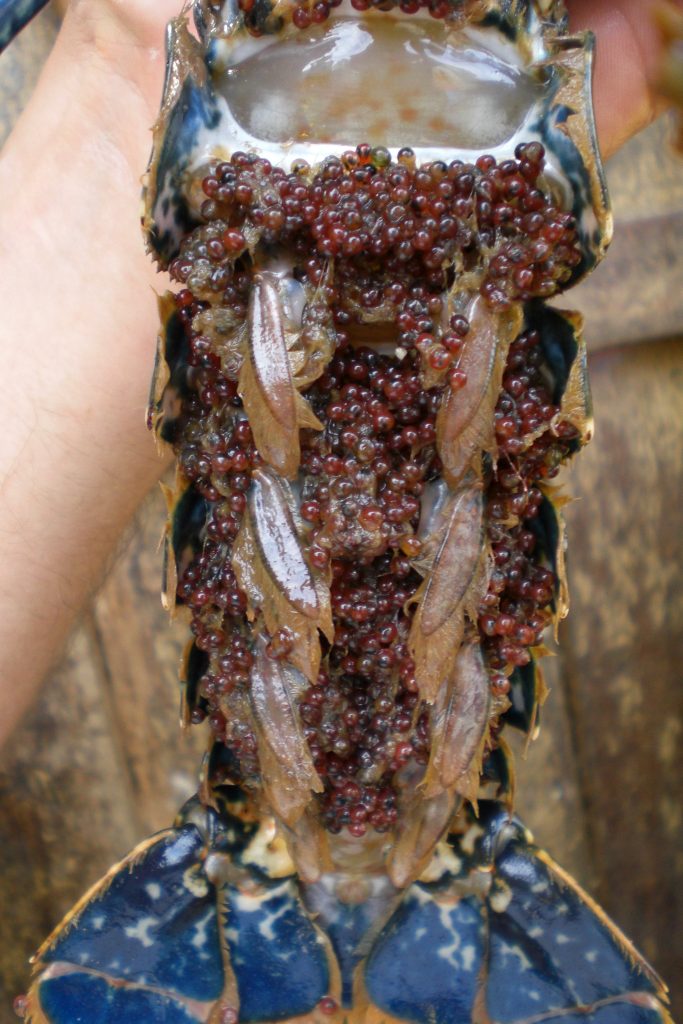
Lobster eggs in early stages of development were observed in every month surveys were carried out; however, the highest proportion of early-stage egg development was noted in the months of August, September and October. This is shortly after the usual mating period.
The main egg shedding period occurred between May and August each year, with the peak shedding day each year predicted as 13th June. Statistical analyses showed that the probability of a lobster naturally shedding eggs from late autumn, over winter and early spring, is approximately 0% in Devon waters.
Conclusions
This study has shown that egg-shedding primarily occurs between May and August, peaking in mid-June. The probability of natural shedding reduces to approximately zero over winter months. Seasonal context is therefore essential in determining whether a lobster has been illegally scrubbed.
In winter, a female lobster observed without eggs but showing mucous-like substance on the pleopods or traces of egg attachment is almost certainly not a naturally-shed individual. It is likely to have had its eggs removed artificially, or to have experienced significant physiological stress causing egg shedding. Based on all survey observations, normal fishing operations are not expected to cause sufficient stress to result in egg shedding.
These surveys have produced an evidence base to help inform the use of enforcement tools that may be used to identify if a berried lobster has been scrubbed of its eggs.
D&S IFCA is grateful to the commercial fishers who hosted Officers onboard and assisted with these surveys. D&S IFCA does not have its own research vessel and relies on fishing vessels, partnership working and remote monitoring to gather data to inform its management considerations.
Additional Information
More information about the various research work being undertaken by D&S IFCA in 2026/2027 is set out in D&S IFCA’s Annual Plan that can be viewed here.